Center Certification & Testing International

basic introduction
Semiconductor light-emitting diodes (LEDs) have been widely used in indicator lights, signal lights, instrument displays, mobile phone backlights, car light sources, etc. White LED technology has also continued to develop, and LEDs have become more and more widely used in the field of lighting. In the past, there were no more comprehensive national and industry standards for LED testing. In production practice, only relative parameters can be used as the basis. Different manufacturers, users, and research institutions have been controversial about this, leading to the development of the domestic LED industry. Big impact.
Optical performance measurement
Luminous flux
Method 1 Integrating sphere spectroradiometer
Guideline:
CIE84: 1989 "Measurement of Luminous Flux";
IESNA LM79-08 "Electrical and photometric measurement of solid-state lighting products"
Method 2 Distribution Photometer
Guideline:
CIE84: 1989 "Measurement of Luminous Flux";
IESNA LM79-08 "Electrical and photometric measurement of solid-state lighting products"
Test items:
Beam angle Light efficiency Luminous flux
Ring band Spectral power distribution Color difference Peak wavelength
Lumen maintenance Color rendering index Color coordinate Color tolerance
Light intensity distribution (light distribution curve)
Method Distribution Photometer
Guideline:
IESNA LM79-08 "Electrical and photometric measurement of solid-state lighting products"
CIE 121: 1998 "Luminaire Photometry and Distribution Photometry"
CIE 043: 1979 "Projected light intensity test"
GB / T 9468 General requirements for photometric distribution of lamps
GB / T 7002: 2008 Photometric test of floodlighting lamps
Test items:
Energy efficiency of lamps Beam angle Luminous intensity distribution of lamps Brightness limit curve
Estimated curve of indoor lamps Equal intensity distribution curve Total luminous flux Ring band
Plane iso-illuminance curve Round iso-curve Ballast Lumen Coefficient (BLF) Rectangular constant intensity curve
Test Methods
LED is a unipolar PN junction diode composed of semiconductor inorganic materials, and the relationship between voltage and current is called volt-ampere characteristic. LED electrical characteristics include forward current, forward voltage, reverse current, and reverse voltage. LEDs must be driven by a suitable current and voltage to work properly (as shown in Figure 1). The maximum allowable forward voltage, forward current, and reverse voltage and current of the LED can be obtained by testing the electrical characteristics of the LED. In addition, the optimal working electric power of the LED can also be determined.
The test of LED electrical characteristics is generally carried out by the voltage and ammeter under the power supply of the corresponding constant current and constant voltage source.
Optical characteristics test
Similar to other light sources, the test of LED light characteristics mainly includes luminous flux, luminous efficiency, radiant flux, radiant efficiency, light intensity, light intensity distribution characteristics and spectral parameters.
Luminous flux and efficiency
There are two methods for measuring luminous flux, namely integrating sphere method and variable angle photometer method. The variable angle photometer method is the most accurate method for measuring luminous flux, but due to its longer time-consuming, the sphere method is generally used to test the luminous flux. There are two test structures in the existing integrating sphere method for measuring LED luminous flux. One is to place the tested LED at the center of the sphere, and the other is to place it on the wall of the sphere.
Since the integrating sphere method is used to measure the luminous flux, the self-absorption of light by the light source will affect the test results. Therefore, it is often necessary to introduce auxiliary lights.
After the luminous flux is measured, the luminous efficiency of the LED can be measured with an electrical parameter tester. The test methods of radiant flux and radiation efficiency are similar to the test of luminous flux and luminous efficiency.
Light intensity and light intensity distribution characteristics
The light intensity of the point light source is evenly distributed in all directions of the space, and the test results received by detectors with different receiving apertures at different distances will not change. However, due to the inconsistent light intensity distribution of LED, the test results vary with the test distance and detector aperture. Therefore, CIE-127 proposed two recommended test conditions, so that each LED under the same conditions for light intensity test and evaluation as shown in Figure 5. At present, the recommended test conditions of CIE-127 have been cited by various LED manufacturers and inspection agencies.
Spectral parameters
The spectral characteristic parameters of LED mainly include peak emission wavelength, spectral radiation bandwidth and spectral power distribution. The spectrum of a monochromatic LED is a single peak, and its characteristics are expressed in terms of peak wavelength and bandwidth, while the spectrum of a white LED is composed of multiple monochromatic spectra. The spectral characteristics of all LEDs can be represented by the spectral power distribution, the white LED spectral power distribution. And the chromaticity parameter can also be calculated from the spectral power distribution of the LED.
The measurement of the spectral power distribution needs to be performed by splitting, which separates each color light from the mixed light for measurement. Generally, prisms and gratings can be used for splitting.
Our advantage
1. With a professional qualification and experienced expert technical team, we can provide you with professional consultation and services.
2. Have advanced laboratory equipment to ensure the accuracy and reliability of test data.
3. As a third-party testing and certification organization trusted by customers worldwide, we are your certificate of quality.
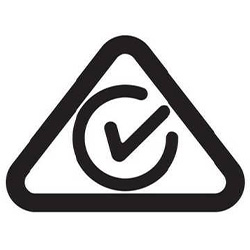
Australian RCM certification
Label printers entering the Brazilian market, ANATEL certification is an essential passport! It is the recognition of the Brazilian Telecommunications Authority for the safety and compliance of electronic products, without which products cannot be legally sold.
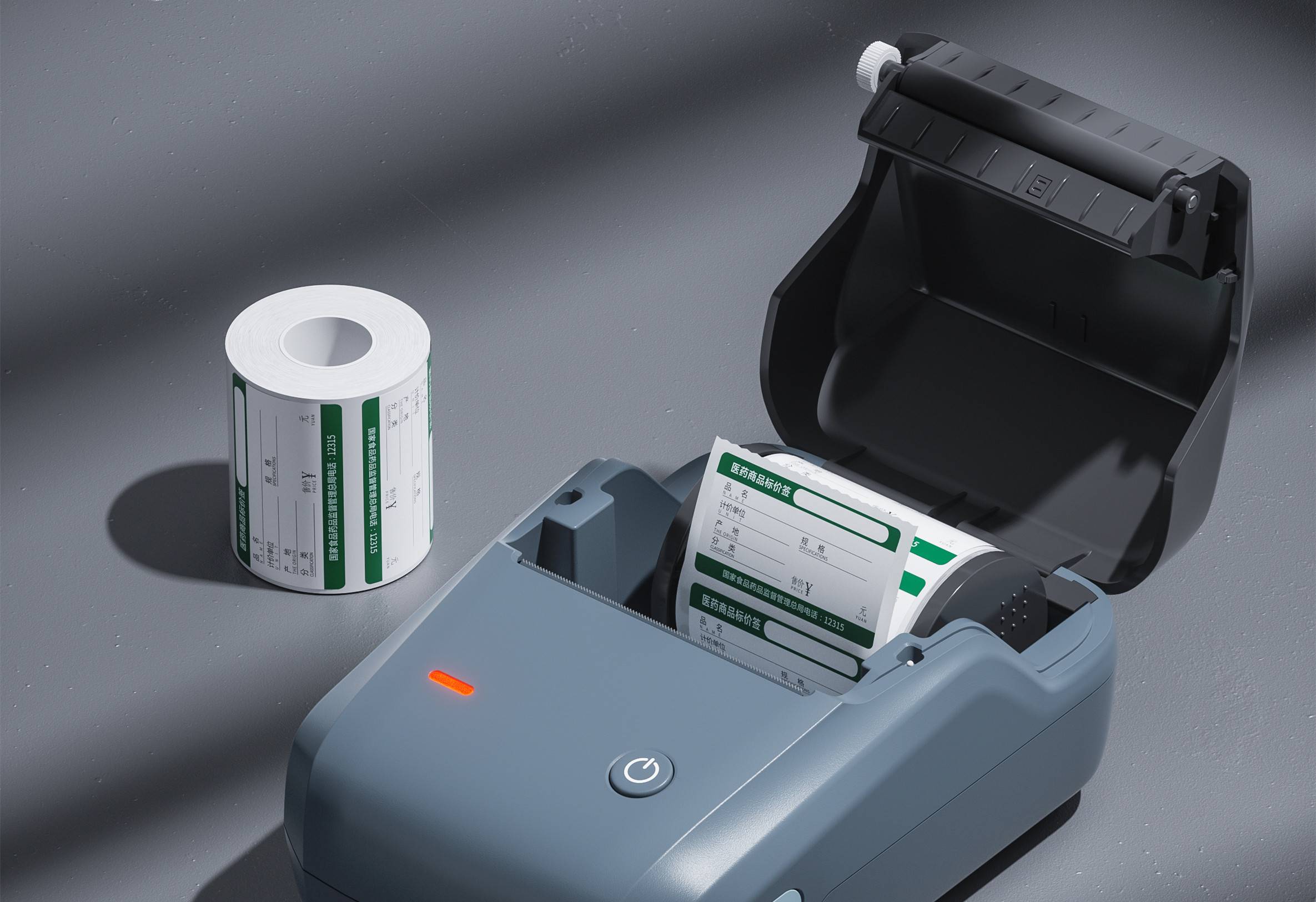
SRRC certification is not only a guarantee of product compliance, but also a key to opening up the market.
Semiconductor light-emitting diodes (LEDs) have been widely used in indicator lights, signal lights, instrument displays, mobile phone backlights, car light sources, etc. White LED technology has also continued to develop, and LEDs have become more and more widely used in the field of lighting.
Get a quote

Tik Tok